If you’re trading synthetic indices on Deriv, you already know one thing — Crash and Boom 300 does not forgive mistakes. Spikes are fast. Entries must be precise. Risk must be controlled.
So what’s the best Crash and Boom 300 spike strategy 2026 traders should be using?
Let’s break it down step-by-step.
Quick Summary
-
Crash 300 spikes down, Boom 300 spikes up.
-
The best spike entries come from liquidity + structure alignment.
-
Use higher timeframe bias (H1 / H4) before M5 entries.
-
Wait for compression before spike zones.
-
Never risk more than 1–2% per trade.
-
Patience is the real edge in 2026.
Understanding Crash 300 & Boom 300
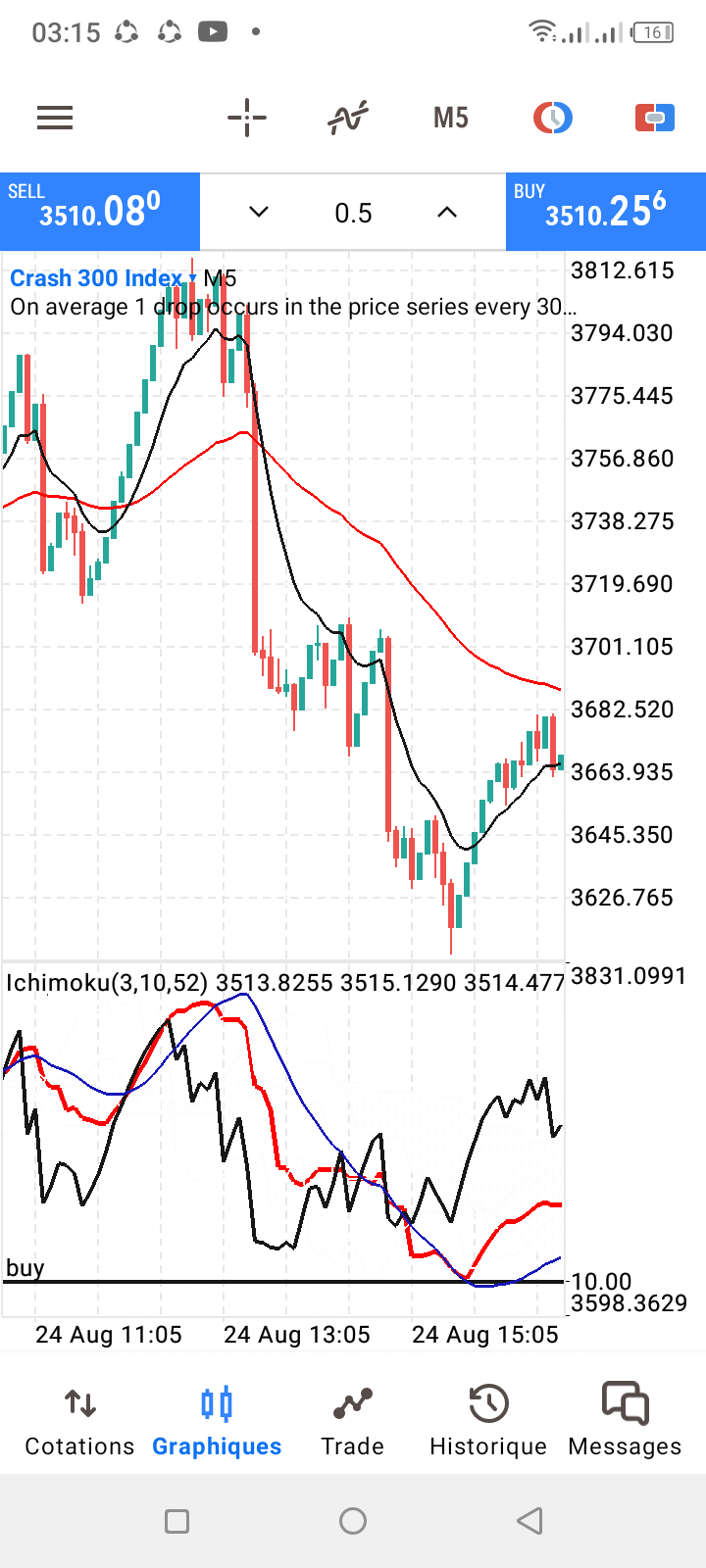
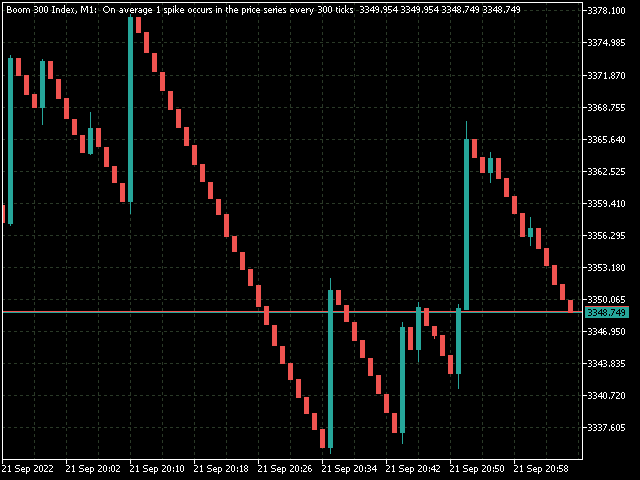
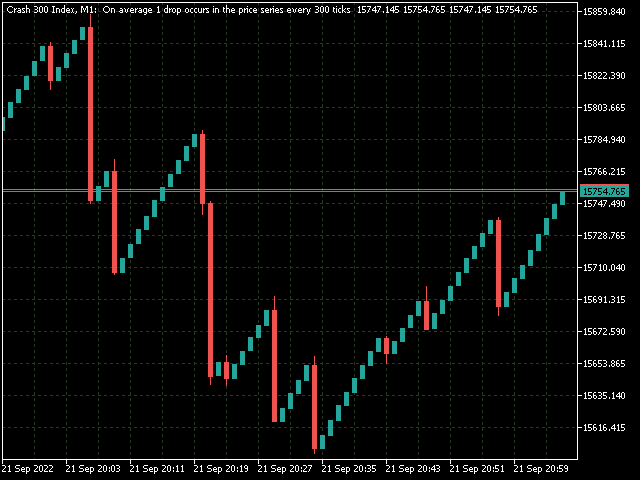
Crash 300 and Boom 300 are synthetic indices designed to spike:
-
Crash 300 → Sudden downward spikes
-
Boom 300 → Sudden upward spikes
The “300” means on average a spike occurs every 300 ticks — but that does NOT mean it’s predictable by counting candles.
Spikes happen when liquidity conditions are met.
That’s what we trade.
The Core Crash and Boom 300 Spike Strategy 2026
Step 1: Identify Higher Timeframe Bias (H1 / H4)
Before looking for spikes:
-
Mark major highs and lows.
-
Identify overall structure (HH/HL or LH/LL).
-
Determine trend direction.
For Boom 300:
You want bullish structure before catching upward spikes.
For Crash 300:
You want bearish structure before catching downward spikes.
Never trade spikes against strong higher timeframe trend.
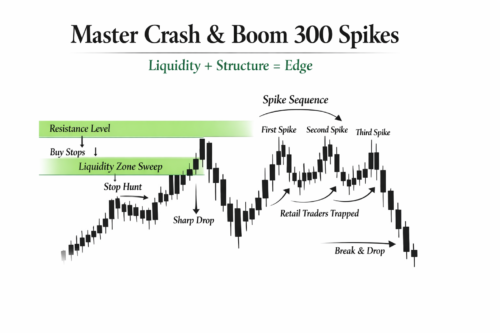
Step 2: Wait for Liquidity Compression


Before major spikes, you’ll often see:
-
Tight consolidation
-
Small-bodied candles
-
Equal highs or equal lows
-
Repeated rejection zones
This builds liquidity.
Retail traders enter early.
Smart money waits.
When liquidity is full → spike hits.
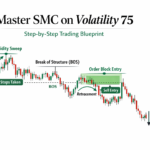
Step 3: Liquidity Sweep Setup (Advanced Entry)
This is where 2026 traders gain edge.
For Boom 300 (Upward Spike Strategy)
-
Price sweeps previous low.
-
Forms rejection wick.
-
Breaks minor structure bullish.
-
Pulls back to demand zone.
-
Enter buy targeting spike continuation.
For Crash 300 (Downward Spike Strategy)
-
Price sweeps previous high.
-
Forms rejection wick.
-
Breaks minor structure bearish.
-
Pulls back to supply zone.
-
Enter sell targeting spike continuation.
No sweep = no setup.
Best Timeframes for Spike Trading
| Purpose | Timeframe |
|---|---|
| Bias | H1 / H4 |
| Setup Confirmation | M15 |
| Entry Precision | M5 |
| Scalping Aggressive | M1 (Advanced only) |
Most beginners lose money trading M1 only.
Structure first. Entry second.
Risk Management for Crash and Boom 300 in 2026
Synthetic indices are engineered volatility.
Follow these rules:
-
Risk 1–2% per trade
-
Use fixed lot sizing
-
Do NOT martingale
-
Avoid stacking positions during drawdown
-
Stop trading after 2 losses in a row
Your survival matters more than catching one spike.
Common Mistakes Traders Make
❌ Entering randomly hoping for spike
❌ Counting candles to “predict” spike
❌ Trading against higher timeframe structure
❌ Overleveraging small accounts
❌ Revenge trading after missed spike
Spike trading is about positioning — not prediction.
Conservative vs Aggressive Spike Strategy
Conservative (Higher Win Rate)
-
Trade only with HTF trend
-
Wait for liquidity sweep
-
Enter after structure break
-
Target 1–2 spikes max
Aggressive (Higher Risk)
-
Enter during compression
-
Tighter stop
-
Multiple entries
-
Requires strong psychology
If you’re new in 2026, start conservative.
Practical Example Scenario (Boom 300)
-
H1 bullish trend confirmed.
-
M15 pulls back into demand.
-
Equal lows form.
-
Liquidity sweep happens.
-
Strong bullish candle closes.
-
Enter on retracement.
-
Spike occurs within next cycles.
This setup is repeatable when disciplined.
Is Crash and Boom 300 Still Profitable in 2026?
Yes — but only with structure.
Random entries no longer survive.
The edge in 2026 comes from:
-
Liquidity awareness
-
Patience
-
Proper lot sizing
-
Emotional discipline
Synthetic markets reward strategy — not gambling.
Final Takeaway
The best Crash and Boom 300 spike strategy 2026 is built on:
-
Higher timeframe bias
-
Liquidity compression
-
Sweep confirmation
-
Structured entry
-
Strict risk management
Spikes are not random.
They are liquidity events.
Trade smart. Protect capital. Stay patient.