How to build a DIY solar generator for power outages
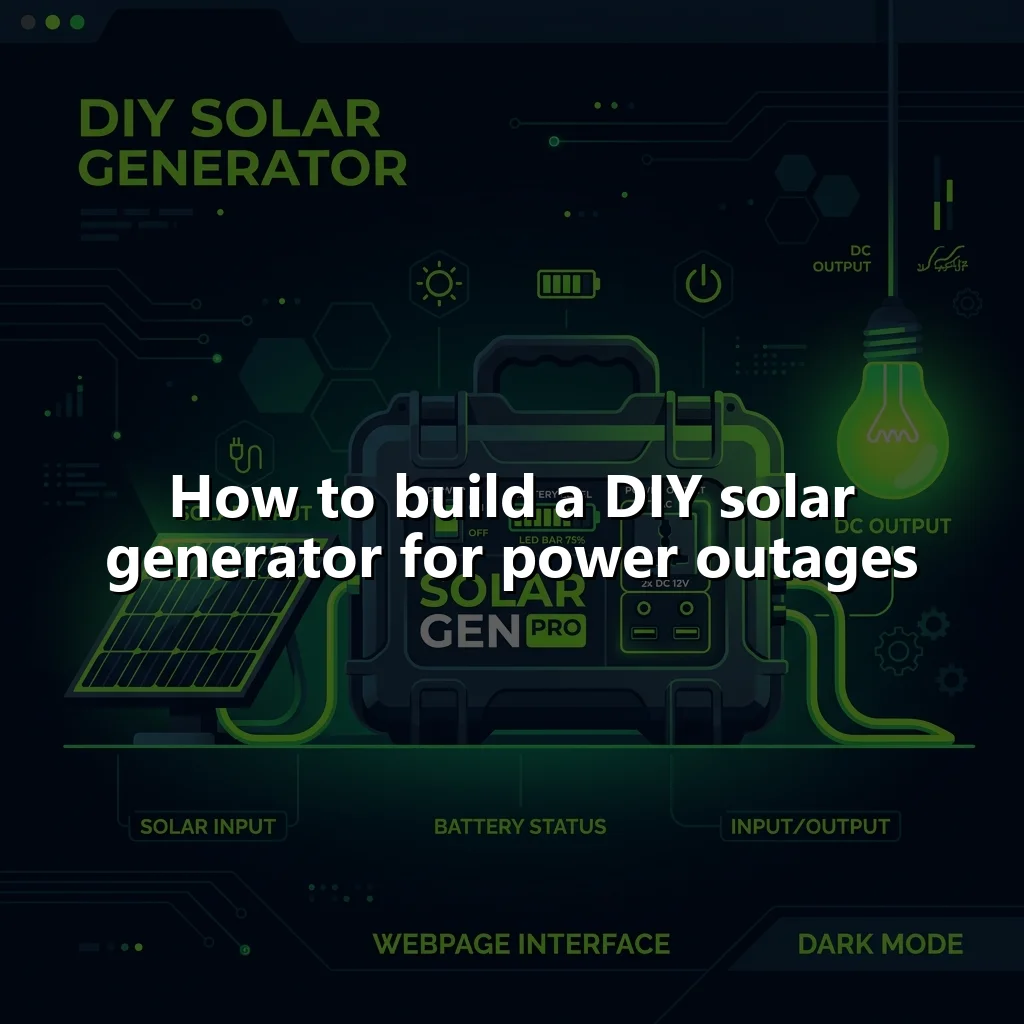
Learn about How to build a DIY solar generator for power outages. Expert guide for Jamaica.
Build Your Own DIY Solar Generator: A Fun Weekend Project for Power Outages
If you're tired of those annoying localized power outages but don't want to drop a ton of cash on a huge whole-home solar system, I've got a great idea for you. Building your own DIY solar generator is a fun, cost-effective weekend project that gives you silent, fume-free backup power for your fans, laptops, and routers. Trust me, it's easier than you think.
The Core Components
Before you start, you'll need to grab four main items from your local hardware or electronics store. Here's what you're looking for:
- A 12V Lithium Iron Phosphate (LiFePO4) Battery – Aim for 50Ah to 100Ah. These are safe, long-lasting, and perfect for this project.
- A Pure Sine Wave Inverter – A 1000W model should be plenty for small electronics like laptops and fans.
- An MPPT Solar Charge Controller – Get one rated for 20A to 30A. This little guy manages the power flow and keeps your battery happy.
- A Single 200W to 300W Solar Panel – This is your sun catcher. It'll keep everything charged up.
The Assembly
Alright, let's get our hands dirty. First, grab a heavy-duty plastic toolbox or a cooler and secure the battery inside. You want it snug so nothing shifts around. Then, connect the battery terminals directly to the Inverter using thick gauge wire – I'm talking about 4 AWG or similar. Don't forget to add an inline DC breaker or fuse for safety. You don't want any sparks flying!
Need Direct Contractor Support or a Quote?
Have a construction project, need maintenance or repair in Jamaica, or want an estimate? Message our team directly for quick assistance.
Next, connect the battery terminals to the battery side of the MPPT Charge Controller. This step is key because the controller makes sure your battery charges safely and doesn't overdo it.
Adding the Solar Panel
Now for the fun part: run MC4 cables from your solar panel into the PV side of the MPPT Charge Controller. When the sun's out, the controller will safely charge your battery. And when JPS decides to take a break, just plug your extension cord into the inverter, flip the switch, and boom – you've got instant, silent power. No fumes, no noise, just peace of mind.
Need help? Email us at admin@howjamaica.com.
Join 5,000+ Jamaicans in the Diaspora 🇯🇲
Get daily Jamaican news breakdowns, customs duty tips, and exclusive diaspora guides straight to your phone.