A Cop's Truth: Crime's Heavy Emotional Toll on Jamaicans
A law enforcement officer, who once endured the trauma of being held hostage by prisoners, asserts that crime inflicts an unbearable emotional burden on the Jamaican populace. He emphasizes that the psychological scars extend far beyond the immediate victims, impacting the entire fabric of society.
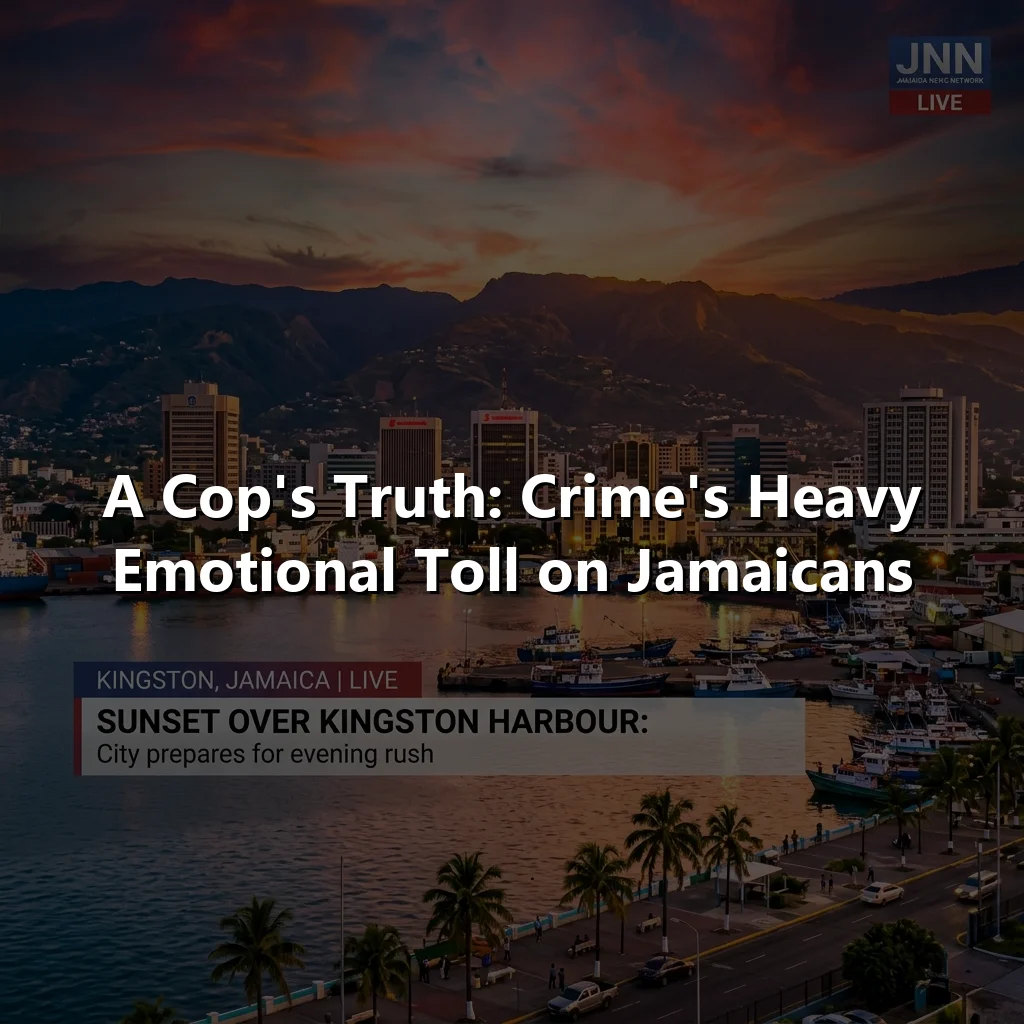
Crime's Emotional Weight: A Hostage Survivor's Perspective on Jamaica's Burden
You know, we talk a lot about crime in Jamaica—the numbers, the headlines, the lock-offs. But we don’t talk enough about what it does to your soul. The constant knot in your stomach. The way your heart races when you hear a loud noise at night. That’s the real weight, and it’s crushing us.
A seasoned law enforcement officer—someone who’s been in the trenches and then some—recently opened up about this. And here’s the thing: this isn’t just any officer. This is a man who was once held hostage by prisoners. He lived through the absolute worst of it. And he’s telling us that the scars aren’t just on the skin; they’re deep in the psyche of this country.
Speaking on condition of anonymity so he could talk freely, he described the sheer terror of being at the mercy of criminals. That helplessness? It changes you. He said it gave him a raw, unfiltered look at the fear and distrust that’s eating away at our communities. “When you’ve stared death in the face, when your life hangs by a thread, you understand the true cost of lawlessness,” he told us. “It’s not just the physical threat. It’s the constant worry. It’s the erosion of peace of mind. It’s the feeling that nowhere is truly safe.”
And honestly? That hits home for so many of us. We live with that daily apprehension. It shows up as stress, sleepless nights, jumping at shadows. We’re hyper-vigilant. We’ve pulled back from the community life that used to define us. Parents are terrified for their kids. Business owners are dealing with extortion. Even running a simple errand feels like a gamble. That fear? It’s not just a feeling. It’s a wall that stops social cohesion, it holds back economic growth, and it makes it hard for hope to even take root.
The officer stressed that we can’t just police our way out of this mess. We need a whole different approach. He’s calling for real investment in mental health services—for victims, for witnesses, and yes, for the police officers themselves who see the worst of it every day. He’s pushing for community-led projects that rebuild trust and give people a place to turn for psychological support. “We cannot simply lock up criminals and expect the emotional wounds to heal themselves,” he said flatly. “We need to invest in the social fabric, in the minds and hearts of our people.”
So, what’s the takeaway for us? It’s simple, but it’s hard. Acknowledge the hurt. Don’t brush it off. If you or someone you know is struggling, reach out. Get support. And get involved in your community—real, active involvement. Because healing Jamaica isn’t just about driving down crime stats. It’s about making sure the heavy burden of fear gives way to a renewed sense of security and well-being. We all deserve that peace.
Need help? Email us at admin@howjamaica.com.
Own or Inherited Land in Jamaica? Verify Registered Title Records Online
Don't leave family property at risk of capture or boundary disputes. Our researchers pull official National Land Agency (NLA) records and send a plain-English report with a WhatsApp voice note within 48 hours. From $29.99 USD flat.
Check Land Title Records (From $29.99) →Join 5,000+ Jamaicans in the Diaspora 🇯🇲
Get daily Jamaican news breakdowns, live forex rate alerts, customs duty tips, and exclusive diaspora guides straight to your phone.