Govt Allocates $65 Million for Drought Relief Water Trucks in ...
Learn about Govt Allocates $65 Million for Drought Relief Water Trucks in Southern Parishes. Expert guide for Jamaica.
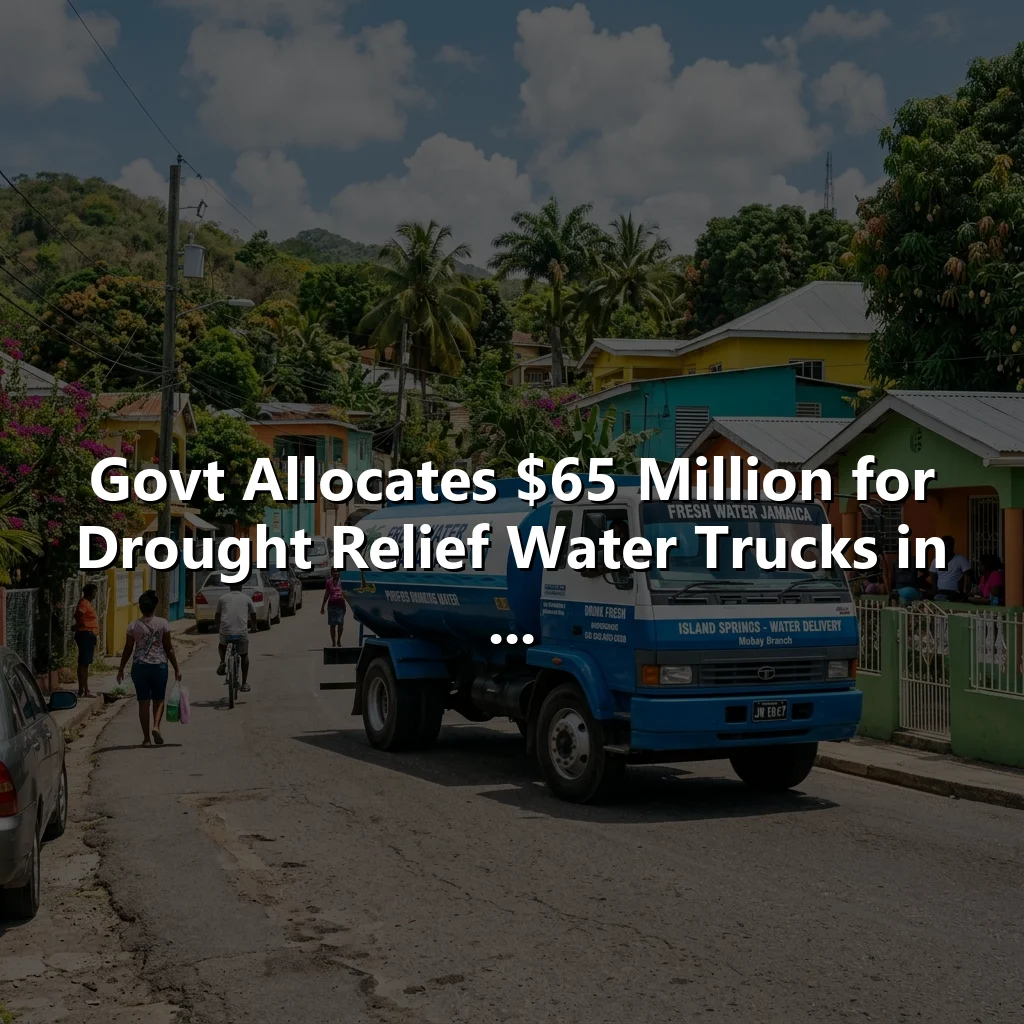
The sun is beating down, the land is cracking, and Jamaica is in the middle of one of the toughest drought seasons we've seen in a long time. But here's some good news: the government just dropped $65 million to buy new water trucks for the parishes that are hurting the most—St. Elizabeth, Manchester, and Portland. This announcement came in early June 2026, right when folks in these areas are watching their water supplies dry up, their catchments fail, and the heat just won't let up.
The Drought: A Crisis Unfolding
If you're from St. Elizabeth, you already know the story: the tap stops running, your tank water is getting low, and the sun is relentless. This year, it's especially rough. The Meteorological Service of Jamaica says we've had below-average rainfall since late 2025, and the southern and central parishes are getting hit the hardest. St. Elizabeth—the breadbasket of Jamaica—is watching its farmland wither. Manchester, with its busy towns and farming communities, is feeling the pinch too. And even Portland, which is usually lush and green, has seen its rivers and springs slow to a trickle.
So what's the government doing? They're putting $65 million into buying new water trucks—built for rough roads and high-demand routes—to get emergency supplies to the communities that need it most. This isn't just a quick fix; it's a real investment in making our water system stronger.
Where the Trucks Will Go
Here's how the money breaks down across the three parishes:
- St. Elizabeth: $25 million for two heavy-duty water trucks. These will serve places like Junction, Santa Cruz, and the South Coast fishing villages. Farmers are desperate—many have already lost crops and livestock. The trucks will focus on households and small farms.
- Manchester: $20 million for two trucks targeting Mandeville, Christiana, and the rural northern areas. Manchester's hilly terrain makes delivery tough, but these new trucks come with high-pressure pumps to reach those elevated communities.
- Portland: $20 million for two trucks focusing on Port Antonio, Buff Bay, and the interior valleys. Portland's drought isn't as bad as the south, but the dry spell has still messed up water supply to schools, health centers, and tourist spots.
The rest of the money will cover logistics, maintenance, and training for drivers and operators across all three parishes.
Why Water Trucks? A Practical Solution
You might be thinking: why spend on trucks instead of pipes? Good question. The thing is, piping networks take years to design and build. Droughts don't wait. Water trucks can hit the road within days, reaching remote areas that might never get permanent pipes. They also let us deliver water exactly where it's needed, right when it's needed.
“We cannot pipe water to every hillside home overnight,” a senior official at the Ministry of Economic Growth and Job Creation told us, speaking off the record. “But a well-maintained fleet of water trucks can be the difference between a community surviving the drought or not.”
These new trucks will join an existing fleet that's been stretched thin by the long dry spell. In St. Elizabeth, the National Water Commission (NWC) has been running emergency trucking routes for weeks, but demand is way higher than what they can handle. This $65 million injection will nearly double the trucking capacity in these parishes.
Community Response: Relief and Hope
On the ground, people are cautiously optimistic. In Santa Cruz, St. Elizabeth, market vendor Miss Doreen told HowJamaica: “Mi grateful fi di help. But we need more than truck—we need di rain fi come. Still, every drop count.”
In Manchester, farmer Lloyd Brown shared a similar feeling: “Mi have fifty acres of yam and dasheen. If di water nuh come, mi lose everything. Di truck dem a go save some, but we need long-term solution.”
The government hears these concerns. Alongside buying the trucks, the Ministry of Agriculture is rolling out rainwater harvesting incentives and looking into desalination options for coastal communities. But for now, the trucks are the lifeline.
A Broader Look at Drought Management
This isn't the first time Jamaica has turned to water trucks in a crisis. During the 2014-2015 drought, the government spent over $100 million on emergency trucking. But critics say these are just band-aid fixes. “We need to invest in storage, conservation, and watershed management,” says Dr. Carol Williams, an environmental scientist at the University of the West Indies. “Trucks are necessary in an emergency, but they are not a substitute for a national water security plan.”
The government fires back that the $65 million is part of a bigger strategy. The new trucks will be maintained and used year-round—not just during droughts—to help communities with chronic water shortages. They'll also have GPS tracking to make sure routes are efficient and nobody's wasting time or water.
What This Means for You
If you live in St. Elizabeth, Manchester, or Portland, expect to see these new trucks on the road by late July 2026. The NWC will post delivery schedules on its website and through community WhatsApp groups. Priority goes to elderly residents, people with disabilities, and households with young children.
For the rest of Jamaica, this is a wake-up call: water isn't endless. Whether you're in Kingston, Montego Bay, or the countryside, conservation matters. The government is also asking people to report illegal water connections and wastage, which just make things worse for everyone.
The Road Ahead
The $65 million allocation is a solid step, but it's not the end of the story. As climate patterns get more unpredictable, Jamaica has to rethink how we handle water. The new trucks will help today. But tomorrow, we need rain—and a real plan.
For now, the trucks are rolling. And for the people of St. Elizabeth, Manchester, and Portland, that's a lifeline worth celebrating.
Have a story about the drought? Reach out to us at news@howjamaica.com.
Need help? Email us at admin@howjamaica.com.
Own or Inherited Land in Jamaica? Verify Registered Title Records Online
Don't leave family property at risk of capture or boundary disputes. Our researchers pull official National Land Agency (NLA) records and send a plain-English report with a WhatsApp voice note within 48 hours. From $29.99 USD flat.
Check Land Title Records (From $29.99) →Join 5,000+ Jamaicans in the Diaspora 🇯🇲
Get daily Jamaican news breakdowns, customs duty tips, and exclusive diaspora guides straight to your phone.