How Diaspora Groups Can Partner with Jamaica Legally
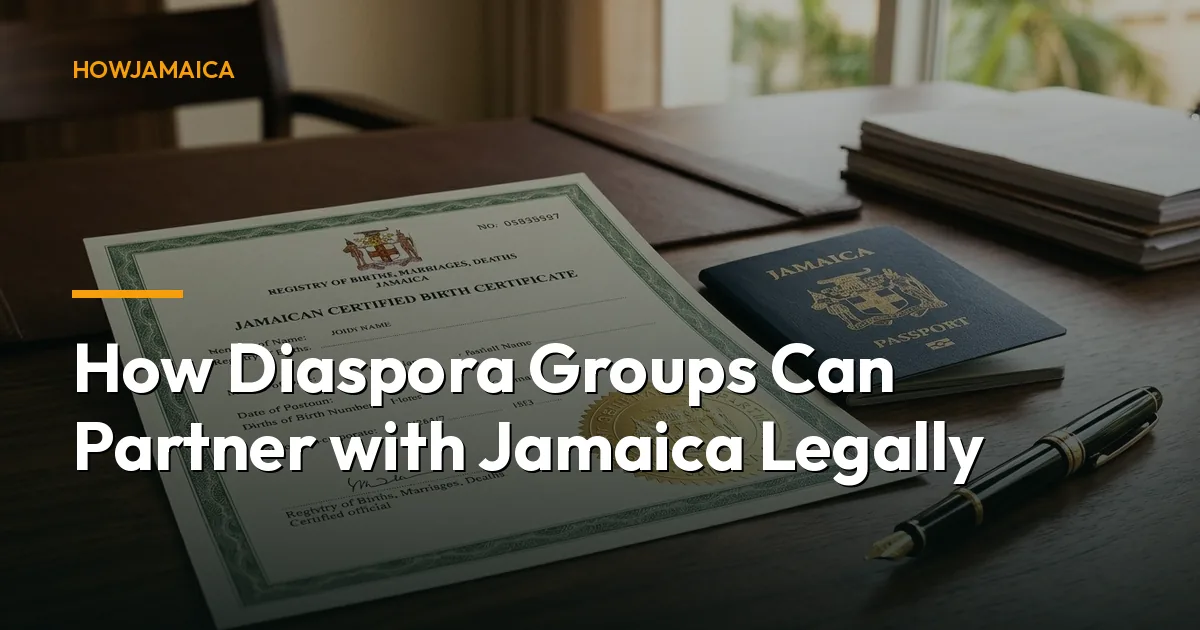
Learn how diaspora associations register, secure duty concessions, and partner legally with Jamaican state agencies.
[!NOTE]
Key Takeaways:
- Overseas diaspora non-profits must formally interface with the Ministry of Foreign Affairs and Foreign Trade (MFAFT) Diaspora Affairs Department for official project endorsement.
- Duty-free clearance of donated medical, educational, or relief goods requires approved charitable status under the Charities Act or an advance Ministerial waiver.
- Establishing an operational arm on the island requires registering as an overseas company or an approved entity via the Department of Co-operatives and Friendly Societies (DCFS).
Executive Summary & Background
The revitalization of umbrella bodies like the National Association of Jamaican and Supportive Organizations (NAJASO) marks a critical shift for the Jamaican diaspora across the United States, Canada, and the United Kingdom. For decades, community associations, alumni chapters, and benevolent groups have channeled millions of dollars into healthcare facilities, primary schools, and community infrastructure across Jamaica.
However, grassroots goodwill frequently collides with institutional bottlenecks. Overseas groups routinely see humanitarian containers stranded at Kingston Wharves or Montego Bay, face unexpected customs duties and GCT charges, or struggle with stringent local banking compliance when wiring project funds. Navigating Jamaica's modern regulatory apparatus requires treating diaspora engagement not merely as philanthropic sentiment, but as a formal legal and logistical operation.
Key Jamaican Laws, Regulations & Requirements
To successfully execute projects, channel capital, or ship resources to Jamaica without legal friction, diaspora organizations must align with specific regulatory frameworks:
- The Charities Act (2013): To receive statutory tax-exempt status in Jamaica, an entity must be recognized as an Approved Charitable Organisation (ACO) by the Charities Authority (administered through the Department of Co-operatives and Friendly Societies). Overseas 501(c)(3) or UK Charity Commission registrations are not automatically recognized in Jamaica without local accreditation or a formal local partner.
- The Customs Act & Tariff Exemptions: Donated goods intended for public institutions do not clear ports tax-free automatically. Exemption from Common External Tariff (CET) and General Consumption Tax (GCT) requires an official Ministerial endorsement from the portfolio ministry (e.g., Ministry of Health and Wellness for medical equipment; Ministry of Education and Youth for school supplies) submitted through the Ministry of Finance and the Public Service.
- Companies Act of Jamaica: If a diaspora group establishes an ongoing administrative presence or buys real property in Jamaica, it must register as an external company under the Companies Office of Jamaica (COJ).
- Anti-Money Laundering / Counter-Financing of Terrorism (AML/CFT) Compliance: Transferring substantial capital to local contractors requires diaspora groups to maintain rigorous paperwork—including constituent board resolutions, donor lists, and formal project contracts—to satisfy Bank of Jamaica (BOJ) regulations at receiving commercial banks.
Step-by-Step Actionable Process
- Register with the Jamaican Diplomatic Mission
Before launching major national initiatives, formalize your association’s profile with the Jamaican Embassy, High Commission, or nearest Consulate General. Submit your organization's charter, executive roster, and overseas tax-exempt documentation to the Diaspora Affairs Department within the Ministry of Foreign Affairs and Foreign Trade (MFAFT). This establishes your institutional track record.
Apostille & Documents
Get Jamaican documents accepted abroad
Apostille for birth, marriage and police certificates, handled with the Ministry of Foreign Affairs in Jamaica.
From $219 USDPrice depends on the document
- Pay by card or PayPal
- WhatsApp +1 (207) 613-5240
- Formalize a Counterpart Agreement with a Local Beneficiary
Never ship equipment or wire project funds directly to an individual. Draft a formal Memorandum of Understanding (MoU) with an accredited Jamaican institution (such as a Regional Health Authority, a government-aided school board, or a DCFS-registered NGO). The MoU must explicitly state who receives the assets, who manages project execution, and who assumes ownership.
- Secure Import Tax Waivers Prior to Shipment
Do not dispatch shipping containers until duty relief is fully confirmed in writing. Your Jamaican counterpart or designated licensed customs broker must submit a formal application to the relevant portfolio ministry alongside shipping manifests, itemized commercial invoices showing zero-dollar or declared values, and an endorsement letter. That ministry will issue an official exemption submission to Jamaica Customs Agency (JCA).
- Execute the Import Entry via ASYCUDA
Hire a licensed Jamaican customs broker to handle the ASYCUDA clearance process. Ensure the Bill of Lading consigns the cargo directly to the endorsed ministry, statutory board, or approved local charitable institution—not to an overseas executive's personal name. Retain digital copies of all tax-waiver confirmation numbers.
Let's Make Jamaica Better & Start Businesses Together
Get practical email updates with real business opportunities, community initiatives, land & investment guides, and actionable ways we can build together.
- Establish Traceable Banking Channels for Project Funds
If paying Jamaican contractors for construction or community refurbishments, execute wire transfers directly from the diaspora organization’s overseas corporate account into the project escrow account at a Jamaican commercial bank. Provide the receiving institution with a copy of the contractor's formal contract, Tax Compliance Certificate (TCC), and project MoU in advance to prevent anti-money laundering compliance holds.
Frequently Asked Questions
Can an overseas 501(c)(3) organization clear humanitarian goods in Jamaica duty-free?
No, an overseas tax-exempt status does not grant direct customs waivers in Jamaica. You must either clear the consignment through an Approved Charitable Organisation (ACO) registered with Jamaica's Charities Authority or obtain an advance ministerial waiver through the relevant government ministry.
How far in advance should our group begin the duty waiver process before shipping?
You should initiate the waiver and ministerial endorsement process at least six to eight weeks before your shipment departs the overseas port. Goods that arrive in Jamaican waters before waiver approvals are finalized will incur daily demurrage and port storage fees that cannot be retroactively refunded.
Land Title Check
Know who legally owns the family land
We pull the official NLA title record and explain it in plain English, so you can act before a dispute starts.
$49.99 USD flat8-hour rush +$15
- Official NLA records
- Pay by card or PayPal
Make Jamaica Better & Start Businesses Together
Join thousands of Jamaicans at home and across the diaspora. Receive regular email updates on practical business opportunities, community initiatives, land & investment guides, and actionable ways we can build together.