Understanding Land Titles and Property Ownership in Jamaica
For generations, land ownership has been the cornerstone of family security in Jamaica. Whether your roots trace back to hillside farming plots in Manchester, coastal tracts in Portland, or residential subdivisions in St. Catherine, owning a piece of the rock represents independence and heritage. Yet for Jamaicans living abroad in the United States, the United Kingdom, and Canada, keeping track of family ground presents serious challenges. Distance makes it easy for communication to break down, tax payments to lapse, and boundaries to become disputed.
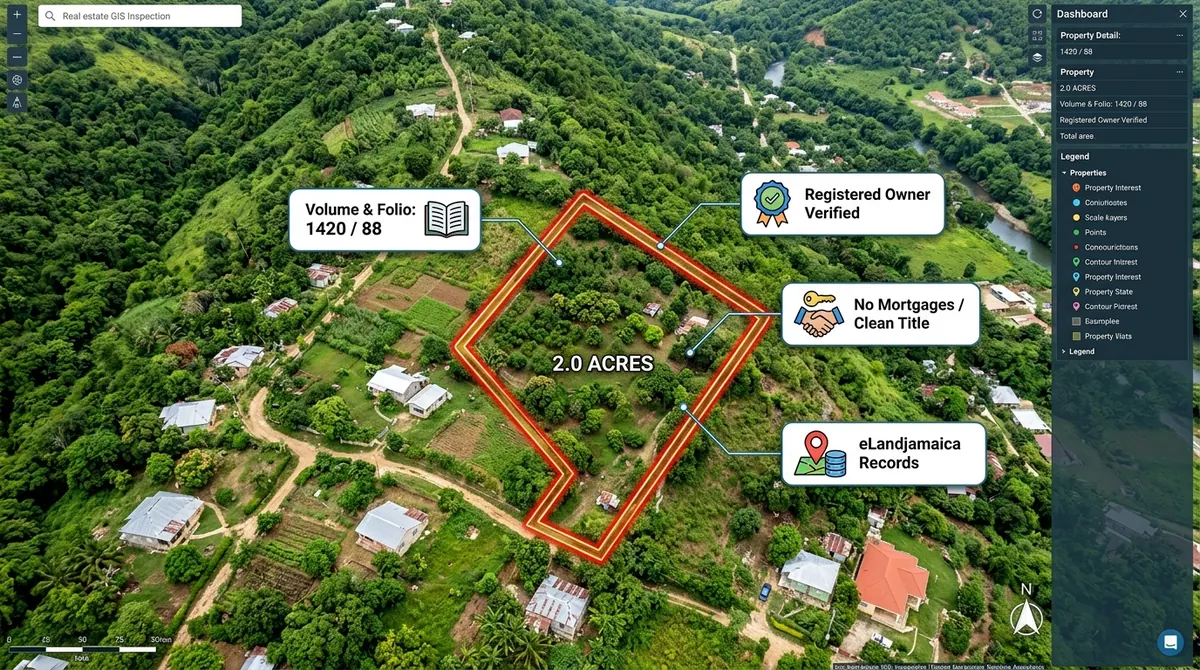
The most critical distinction in Jamaican property is the difference between registered land and unregistered land. Registered land is governed by the Registration of Titles Act. When a parcel is brought under this system, the Titles Division of the National Land Agency issues a Certificate of Title. This document contains a unique identification pair known as the Volume and Folio. The title record is indefeasible, meaning the person listed on the register is recognized by the government of Jamaica as the absolute owner, subject only to encumbrances noted directly on the document.
Key Fact: A street address or property tax receipt is not legal proof of ownership in Jamaica. Only a registered Certificate of Title or an established common-law title deed proves legal ownership before the courts.
How the Volume and Folio System Works
When people search for Jamaican property records, they frequently begin with an informal road name or family reference. However, the National Land Agency organizes records strictly by parish, valuation roll number (LV), and Volume/Folio. The Volume refers to the bound register book kept at the Titles Office on Hanover Street in Kingston, while the Folio represents the specific leaf in that volume. A Volume/Folio designation like Volume 1245 Folio 312 points to one specific surveyed boundary on the island.
Every registered Certificate of Title contains essential sections that impact the value and safety of your property:
- First Schedule (Ownership): Lists the full legal names of the registered proprietors, whether they hold as joint tenants or tenants-in-common, and the date the title was registered.
- Second Schedule (Encumbrances): Details any mortgages held by commercial banks or building societies, government tax charges, restrictive covenants limiting what can be built, and rights-of-way allowing neighbours passage.
- Caveats: Formal statutory warnings lodged by third parties who claim an interest in the land (such as an unpaid creditor, an estranged relative, or an uncompleted buyer). A caveat freezes the title and prevents the owner from selling or mortgaging the land until it is resolved.
The Reality of Unregistered Family Land
A substantial portion of property across Jamaica (estimated by government surveys at roughly 40%) remains unregistered. This is often referred to locally as "family land" or "generation land." In places like St. Elizabeth, Clarendon, Westmoreland, and St. Ann, land was frequently bought generations ago, divided among children by word of mouth, and never formally probated or surveyed.
While unregistered land can be lived on and farmed, it carries vulnerabilities. You cannot easily use it as collateral for a bank loan, and it is far more susceptible to squatter claims. Fortunately, the government of Jamaica introduced the Systematic Land Registration Act. Through this initiative, the National Land Agency works parish by parish to survey declared adjudication areas, verify open family possession, and issue free or heavily subsidized registered titles to legitimate occupiers. Knowing whether your parcel has already been covered under this programme is one of the most valuable insights our reports provide.
Adverse Possession and the 12-Year Rule
The fear of "captured land" is real for diaspora property owners. Under Section 3 of the Jamaican Limitation of Actions Act, if an unauthorized person occupies private land continuously, openly, and without paying rent or acknowledging the owner's title for 12 years, the legal owner's right to bring an action for recovery can be extinguished.
Many diaspora members mistakenly believe that paying property taxes at the tax office prevents adverse possession. While paying taxes demonstrates good faith, Jamaican case law confirms that tax payments alone do not interrupt an adverse possessor's physical occupation. If someone has built a permanent structure or fenced off part of your family lot, obtaining an official search report is the crucial first step. It proves what is registered on title today, establishing the exact baseline your attorney requires to issue formal notices to quit or initiate recovery proceedings.
Due Diligence for Real Estate Buyers
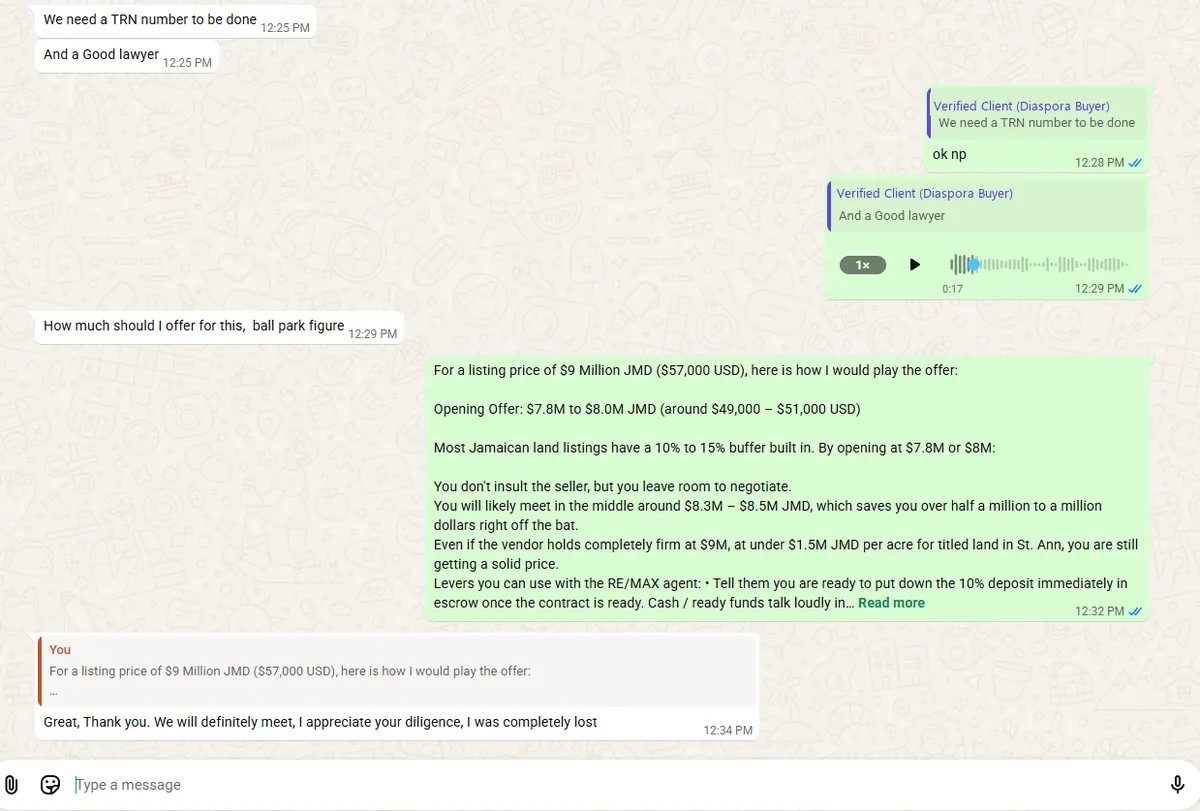
If you are purchasing real estate in Jamaica while living overseas, due diligence is non-negotiable. Fraudulent land schemes frequently involve unscrupulous actors claiming to own land using forged indentures or tax receipts from deceased relatives. Before wiring a deposit or signing an agreement for sale, always verify:
- That the person offering the land is the identical individual named on the registered Certificate of Title.
- That no caveats have been lodged by third parties claiming ownership or inheritance rights.
- That the parcel matches the survey boundary plan deposited at the Titles Office.
- That all property taxes and municipal development conditions are satisfied.
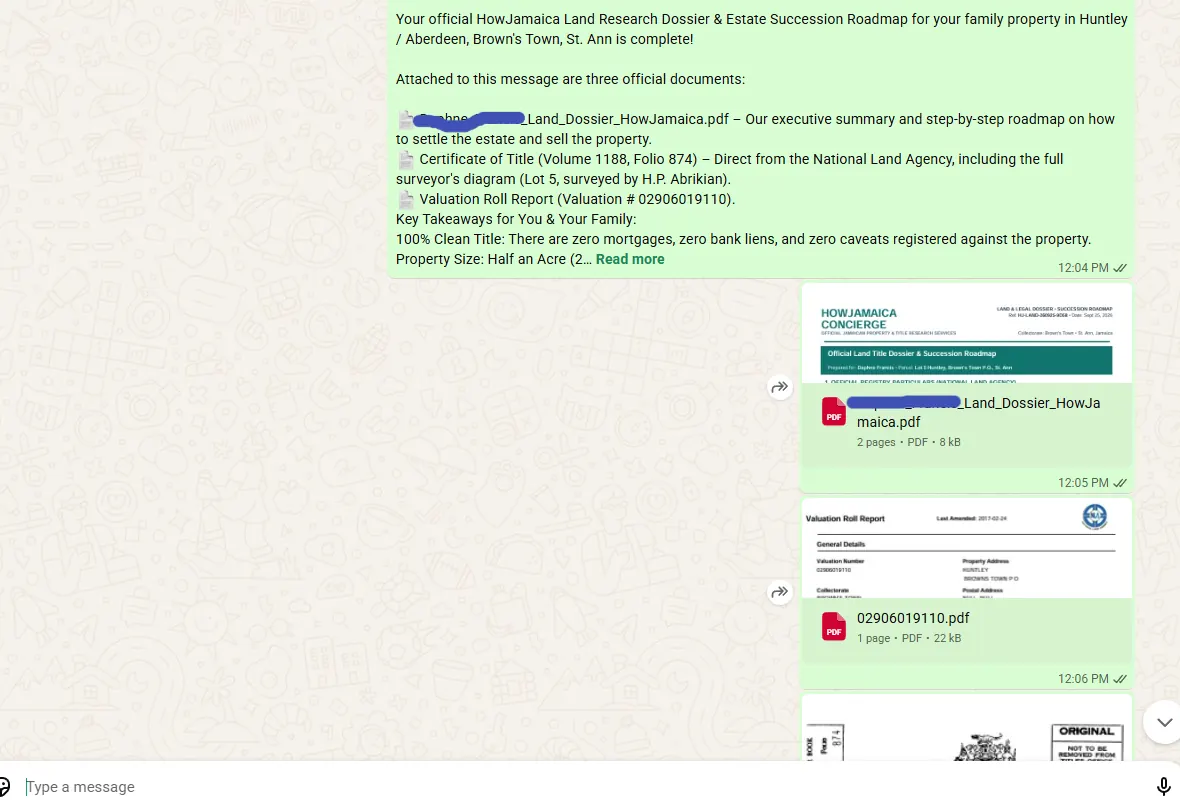
At HowJamaica, our land research service bridges the distance between the Jamaican diaspora and the public registries back home. For $49.99 USD flat, we pull the official documents, interpret the details, and walk you through every finding on WhatsApp within 48 hours.