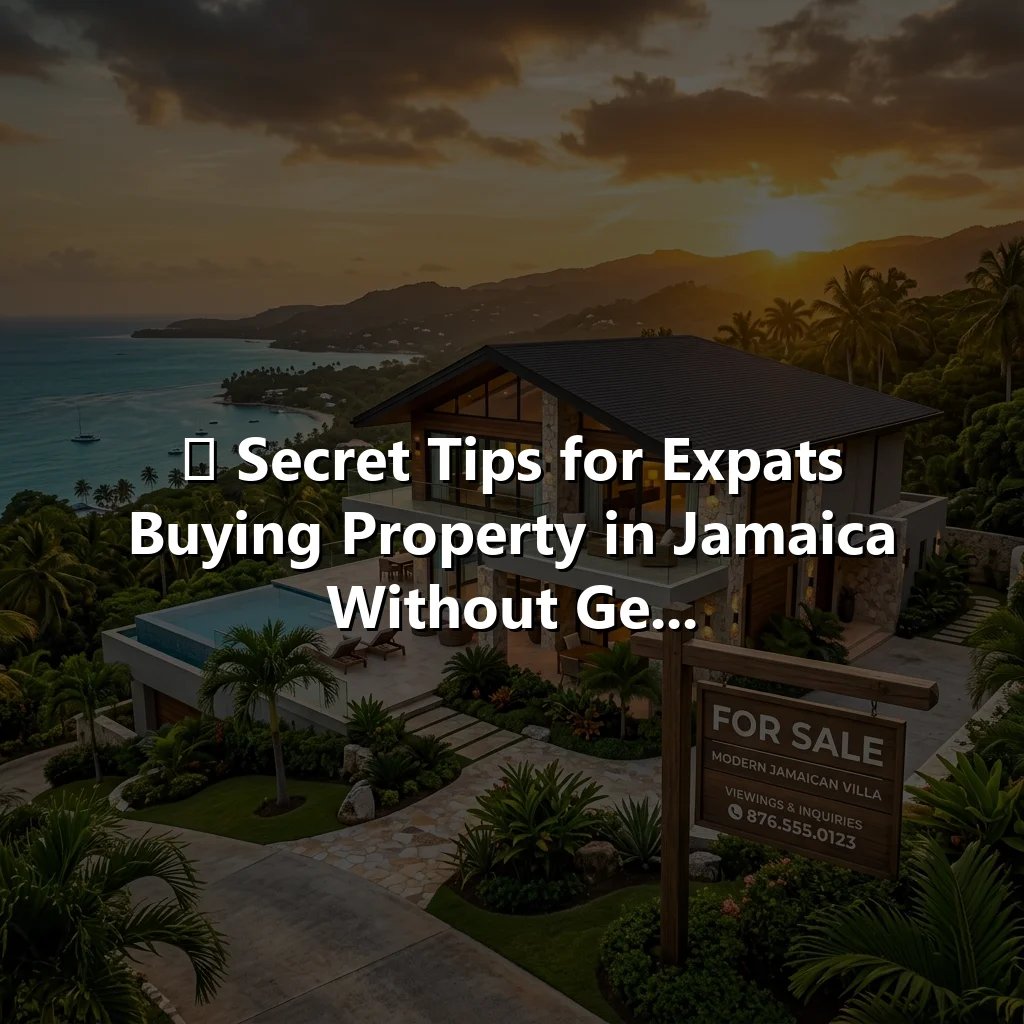
🏡 Secret Tips for Expats Buying Property in Jamaica Without Getting Ripped Off! 🇯🇲
Learn about 🏡 Secret Tips for Expats Buying Property in Jamaica Without Getting Ripped Off! . Expert guide for Jamaica.
🏡 Secret Tips for Expats Buying Property in Jamaica Without Getting Ripped Off! 🇯🇲
You’ve seen the pictures—crystal-clear water, rolling green hills, and that easy-going Jamaican lifestyle calling your name. But buying property here as an expat? It’s not as simple as picking a beachfront lot and signing your name. Locals know the truth: one wrong step and you could kiss your deposit goodbye or land yourself in a property dispute that drags on for years. No stress—we’ve got the inside scoop you need to buy smart. And if you want the full lowdown on costs, agents, and legal steps, swing by HowJamaica for the ultimate expat guide.
💡 Secret #1: Never Trust the ‘Title Deed’ Blindly
In Jamaica, “title deed” can mean anything from a legit registered title to a faded photocopy that’s been passed down for generations. The only thing that counts is the Certificate of Title from the National Land Agency (NLA). Before you hand over a single dollar, get a lawyer to run a title search at the NLA. This shows you if the seller actually owns the land, if there are any mortgages, caveats, or squatters’ claims. Trust us—this one move could save you from a nightmare.
💡 Secret #2: Check for ‘Caveat Emptor’ (Let the Buyer Beware)
Jamaica follows the English common law rule of caveat emptor. That means it’s on you to find any hidden problems. Planning to build a vacation villa? Get a surveyor to check for flood zones, road access, and utility hookups. Also, chat up the neighbors—they’ll know if the land is disputed or if someone’s been farming it for 20 years. Our insider tip: ask the local post office or community center about the property’s history. You’ll hear gossip no real estate agent will ever tell you.
💡 Secret #3: Use a Local Real Estate Attorney (Not a Friend’s Cousin)
We can’t say this enough: hire a lawyer who knows Jamaican property law and is licensed by the General Legal Council. Don’t fall for the “friend of a friend” who says they can handle it on the cheap. A good attorney will draw up a Sale Agreement that includes a deposit held in escrow (usually 10%), a timeline for title transfer, and a clause for inspections. They’ll also walk you through the Stamp Duty and Registration Fees—which can add up to 10% of the property’s price. For a list of trusted lawyers, check out HowJamaica.
💡 Secret #4: Negotiate the ‘Subject to’ Clause
Every contract should have “subject to” conditions: subject to a clean title search, subject to inspection, subject to financing. This gives you a way out if something goes wrong. Some expats skip this and lose their deposit when they find out the land is in a designated flood zone or the seller doesn’t have clear title. Pro tip: push for a 30-day due diligence period—no money changes hands until you’re happy.
💡 Secret #5: Understand the ‘Zoning’ and ‘Restriction’ Game
Just because the land is cheap doesn’t mean you can build your dream home. Jamaica has strict Town and Country Planning laws. Some areas are zoned for farming only, others for homes. You’ll need a building permit from the local parish council, and that can take months. Check with the Jamaica National Heritage Trust if the property is near a historic site—you might not be allowed to dig foundations. Our secret? Look for “residential” or “commercial” zoning on the title, and hire a planning consultant for a pre-purchase feasibility study.
Land Title Check
Know who legally owns the family land
We pull the official NLA title record and explain it in plain English, so you can act before a dispute starts.
$49.99 USD flat8-hour rush +$15
- Official NLA records
- Pay by card or PayPal
💡 Secret #6: Beware of ‘Squatters’ Rights’
In Jamaica, if someone has occupied land openly and continuously for 12 years without permission, they can apply for adverse possession (squatter’s title). A clean title search won’t always catch this—squatters might not be registered. Walk the land yourself. Look for fences, crops, or structures. If you see a shack or a goat pen, ask neighbors how long it’s been there. This is a huge headache that can take years to sort out in court. For a checklist of red flags, check out the expat community on HowJamaica.
💡 Secret #7: Know the ‘Foreign Ownership’ Rules
Good news: Jamaica lets foreigners own land freely—no restrictions on nationality. But you’ll need a TRN (Tax Registration Number) and a Jamaican bank account to handle payments. Also, if you’re buying land to develop and sell, you might need a Real Estate Dealer’s License—unless it’s for personal use. Secret tip: some expats set up a Jamaican company to hold the title, which can make inheritance and tax planning easier. Talk to a tax accountant for advice.
💡 Secret #8: Get a ‘Land Survey’ Before Signing Anything
Even if the title says the land is 5 acres, a survey might show it’s actually 4.8 acres or that a neighbor’s fence is 10 feet inside the boundary. The cost of a survey (around JMD $50,000-100,000) is small change compared to a boundary dispute. Also, check for encroachments—like a neighbor’s driveway or a public road cutting through your lot. Our secret: ask the surveyor to mark the boundaries with concrete posts before you close.
💡 Secret #9: Don’t Forget the ‘Closing Costs’
Most expats budget for the purchase price but forget the extras. In Jamaica, closing costs usually include:
Let's Make Jamaica Better & Start Businesses Together
Get practical email updates with real business opportunities, community initiatives, land & investment guides, and actionable ways we can build together.
- Stamp Duty (5% of purchase price)
- Registration Fee (0.5%)
- Attorney’s fees (2-3%)
- Transfer Tax (2%)
- Withholding Tax (if the seller is a non-resident)
Total can easily hit 10-12% of the property value. Always ask for a full cost breakdown in writing from your lawyer before you commit.
💡 Secret #10: Use an Escrow Agent (Not the Seller’s Bank)
Never wire your deposit straight to the seller or their agent. Instead, use a licensed escrow agent—often your attorney or a trust company. The money sits in a neutral account until all conditions are met. This protects you if the seller disappears or the deal falls through. And always get a receipt and escrow agreement signed by both parties.
🎯 Final Pro Tip: Join the Expat Community
You don’t have to do this alone. There are tons of expats who’ve already been through the Jamaican property market. They share tips, trusted lawyers, and horror stories to watch out for. The best place to connect? The forums and guides at HowJamaica—a goldmine of real-world advice from people who’ve been there.
🏁 Ready to Get Started?
Don’t tackle the Jamaican property market by yourself. Call HowJamaica at +1 (207) 613-5240 or email us to speak to a representative. We’ll hook you up with trusted professionals, guide you through every step, and help you avoid costly mistakes. Your dream property in Jamaica is just a call away!
Need help? Email us at admin@howjamaica.com.
Apostille & Documents
Get Jamaican documents accepted abroad
Apostille for birth, marriage and police certificates, handled with the Ministry of Foreign Affairs in Jamaica.
From $219 USDPrice depends on the document
- Pay by card or PayPal
- WhatsApp +1 (207) 613-5240
Make Jamaica Better & Start Businesses Together
Join thousands of Jamaicans at home and across the diaspora. Receive regular email updates on practical business opportunities, community initiatives, land & investment guides, and actionable ways we can build together.