71-Year-Old Creator: Man Builds Helicopters From Scratch in Duanvale, Trelawny | TVJ News
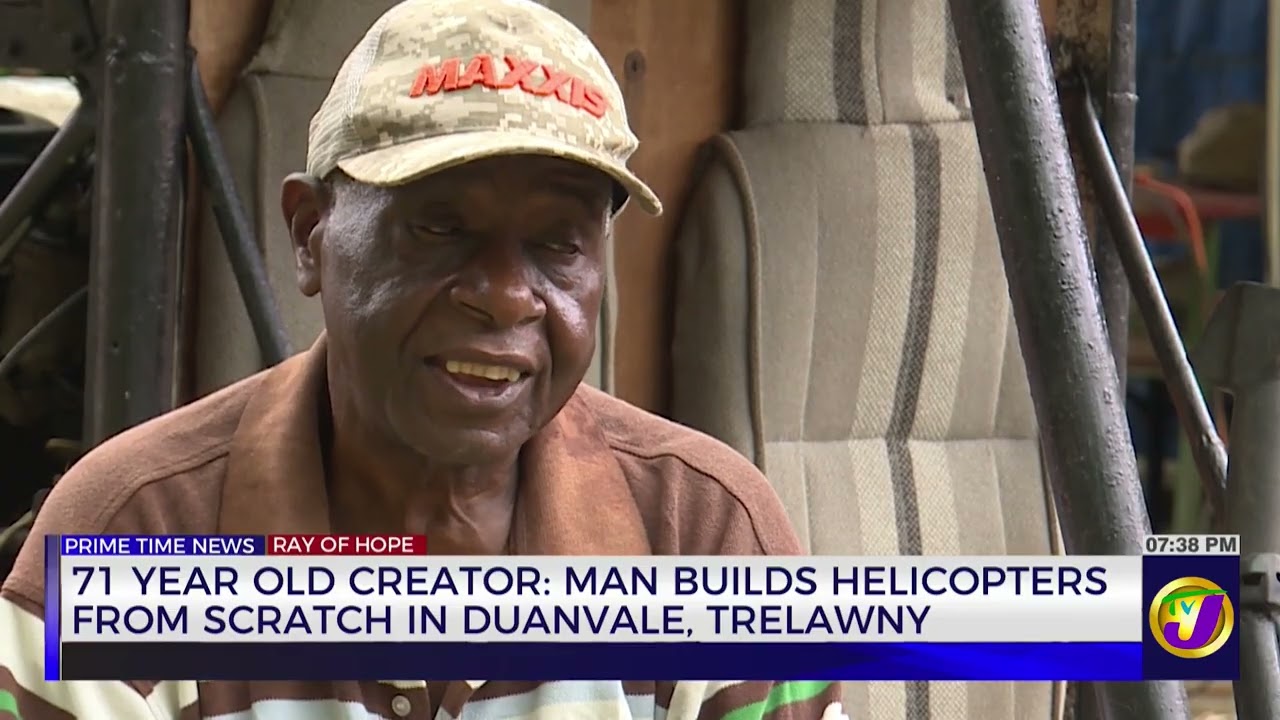
Meet the 71-year-old self-taught inventor in Duanvale, Trelawny building helicopters from scrap metal and salvaged engines.
In the quiet rural district of Duanvale, Trelawny, where sugarcane once ruled the landscape and most garages hold a Toyota or a tractor, an unlikely workshop hums with an even unlikelier project: hand-built helicopters. The story, brought to national attention by TVJ News, centers on a 71-year-old Jamaican creator who has spent years teaching himself the fundamentals of flight and fabrication — not in a factory, not with a government grant, but with scrap metal, salvaged engines, patience, and an unshakable belief that a man from rural Trelawny can build a machine that flies.
Watch the TVJ News feature here:
Key Takeaways
- A 71-year-old self-taught inventor in Duanvale, Trelawny has built helicopters from scratch using salvaged and repurposed materials.
- His work highlights a deep vein of Jamaican grassroots engineering ingenuity that rarely receives formal support or recognition.
- The project raises real questions about aviation safety, regulation, and how Jamaica can better nurture backyard innovators.
- For the diaspora, it is a reminder that world-class creativity exists far beyond Kingston, Miami, and London — and often without a single investor.
- Aspiring makers can learn from his method: start small, document everything, master the mechanics before the dream, and build a community around the work.
Who Is the Man Behind the Helicopters?
The TVJ News report introduces viewers to a soft-spoken but fiercely determined craftsman who, at an age when many Jamaicans are easing into retirement, is instead welding rotor housings and sketching airframe designs by hand. He is part of a long, underappreciated tradition of Jamaican tinkerers — the men and women who repair what others discard and, occasionally, invent something the world has never seen.
What makes his story striking is not just the ambition but the setting. Duanvale is a small, agricultural community in Trelawny, better known for yam, citrus, and the legacy of one of the world's oldest living persons than for aeronautical engineering. Yet that is precisely where the helicopters are taking shape — proof that innovation is not a postcode.
How Do You Build a Helicopter From Scratch?
Building any aircraft from scratch is one of the hardest engineering challenges a person can attempt. A helicopter is harder still, because unlike a fixed-wing plane, it must generate lift, thrust, and control simultaneously through a complex rotor system. Here is what a project like this typically involves:
- Airframe fabrication: Cutting, bending, and welding a lightweight but strong frame — often from steel tubing, aluminum, or repurposed parts.
- Powerplant sourcing: Adapting an engine — frequently from a motorcycle, car, or small industrial unit — to drive the main rotor.
- Rotor and transmission design: The most technically demanding element, requiring precise gearing, balance, and control linkages.
- Control systems: Cyclic, collective, and anti-torque pedals that let the pilot tilt, climb, and turn the aircraft.
- Testing and iteration: Repeated ground runs, tethered tests, and adjustments — the slow, unglamorous work that separates a dream from a machine.
The Duanvale creator's approach reflects a classic self-taught engineering mindset: study relentlessly, scavenge smartly, and improve one component at a time.
The Ingenuity Behind the Build
Learning Without a Classroom
There is no aeronautical engineering programme in Duanvale. Innovators like this one typically learn through a mix of library books, YouTube tutorials, old manuals, and trial and error. That informal education is both a strength and a risk — it breeds creativity but can leave dangerous gaps in knowledge around stress limits, metallurgy, and aerodynamics.
The Scrap-Metal Economy
Jamaica has a thriving ecosystem of second-hand parts, scrap yards, and roadside mechanics. For a backyard inventor, this is a goldmine. A discarded alternator, a bent axle, a dead generator — each becomes raw material. The skill lies in seeing possibility where others see junk.
Why This Matters for Jamaica
Jamaica spends heavily importing machinery, vehicles, and technology. Every self-taught innovator who can fabricate locally represents potential import substitution, job creation, and exportable intellectual property — if the right support structures exist.
Safety, Law, and the Reality of Homebuilt Aircraft
It is important to be clear-eyed here. Building an aircraft is legal in many countries; flying an unregistered, uncertified aircraft in Jamaican airspace is not. The Jamaica Civil Aviation Authority (JCAA) regulates all aircraft operating in the country, and any homebuilt machine intended for flight would need to meet certification and registration requirements. Readers should treat this story as one of engineering inspiration, not a flight manual.
If you or someone you know is pursuing a homebuilt aircraft project, take these steps:
- Contact the Jamaica Civil Aviation Authority (JCAA) before any manned flight attempt to understand registration, airworthiness, and licensing requirements.
- Never test-fly over populated areas or without proper safety protocols and personal protective equipment.
- Document every modification with photos, measurements, and notes — this builds credibility and helps with any future certification.
- Seek mentorship from licensed engineers, pilots, or aviation mechanics, even informally.
- Insure yourself and your project where possible; injuries in a workshop are far more common than crashes.
What the Diaspora Can Do
Jamaicans abroad often ask how they can give back beyond remittances. Stories like this one point to a powerful answer: invest in makers, not just monuments.
- Sponsor tools and materials. A welder, a lathe, or a set of precision instruments can transform a project.
- Connect innovators to expertise. A retired engineer in Toronto or a machinist in Birmingham could mentor remotely.
- Fund documentation. Helping creators record their work turns a local curiosity into a national asset.
- Buy Jamaican-made. Whether it is craft, food, or fabricated parts, spending power fuels local innovation.
If your interests lean toward food and groceries from home, the HowJamaica Store connects the diaspora to authentic Jamaican products — another way to keep money circulating in local communities. And if your project involves importing vehicles, parts, or machinery, always run the numbers through a Jamaica Customs duty calculator before you commit, so unexpected taxes don't stall your build.
Lessons Any Aspiring Inventor Can Use
You do not need a helicopter-sized dream to apply the Duanvale mindset. Whether you are building a solar rig, a food cart, or a piece of furniture, these principles hold:
- Start with what you have. Constraints breed creativity.
- Master the fundamentals first. Understand why something works before you try to improve it.
- Iterate in public. Share your progress; feedback and encouragement compound.
- Respect safety and the law. Ambition without responsibility ends projects — and lives.
- Think long-term. A 71-year-old building helicopters is proof that it is never too late to start, and never too early to keep going.
A Trelawny Story With National Meaning
The TVJ News feature on the 71-year-old helicopter builder is more than a feel-good segment. It is a mirror held up to Jamaica's untapped potential. In a country that produces world-class athletes, musicians, and scientists, there is no shortage of brilliance — only a shortage of pathways. The man in Duanvale built his own pathway, one weld at a time.
His helicopters may or may not ever lift off the ground in a way that satisfies regulators and engineers. But the spirit behind them has already taken flight — and it is a spirit Jamaica would be wise to nurture, fund, and celebrate.
Join 5,000+ Jamaicans in the Diaspora 🇯🇲
Get daily Jamaican news breakdowns, customs duty tips, and exclusive diaspora guides straight to your phone.