How Artificial Intelligence is Changing Jamaican Classrooms
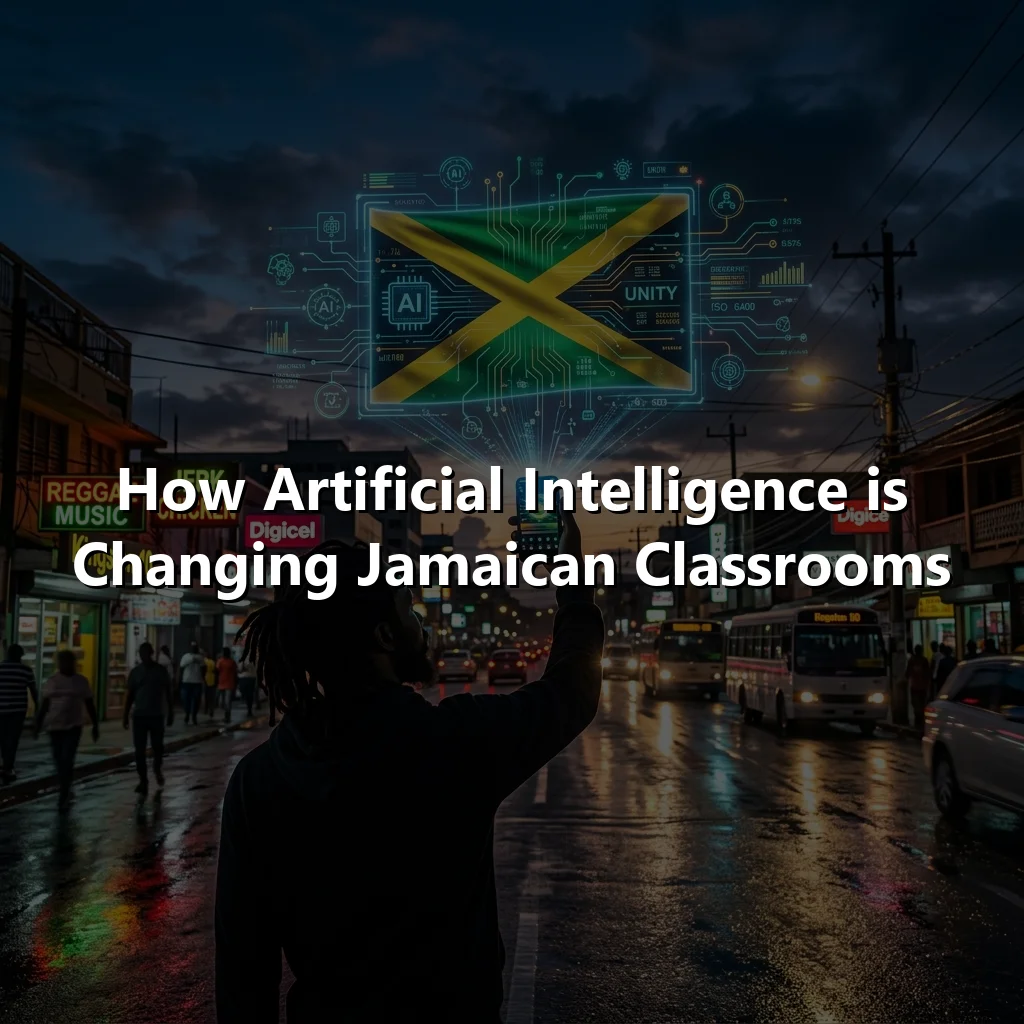
Learn about How Artificial Intelligence is Changing Jamaican Classrooms. Expert guide for Jamaica.
In the heart of Kingston, a teacher at a rural primary school pulls out a tablet to help a student who's struggling with reading. The app on the screen doesn't just highlight words—it listens, corrects pronunciation, and shifts the difficulty level on the fly. This isn't some sci-fi scene; it's happening right now in Jamaica, where artificial intelligence is quietly reshaping how our kids learn.
For decades, Jamaican classrooms have faced problems that feel baked into the system: overcrowded classes, not enough resources, and a one-size-fits-all curriculum that leaves plenty of students behind. But AI is offering a new way forward—not to replace teachers, but as a powerful tool that helps them do what they do best: teach.
Let's break down how AI is making its mark on Jamaican education, what it means for students and teachers, and how we can make sure this tech benefits everyone, from the hills of St. Elizabeth to the busy streets of Montego Bay.
The Real Problem: One Teacher, Forty Students
If you've ever walked into a Jamaican public school, you know the deal. One teacher stands at the front of a classroom packed with 40 or more students, each at a completely different level. Some kids catch on quick; others struggle in silence, too shy or overwhelmed to raise their hand.
This is where AI shines. Adaptive learning platforms—like the ones from Carnegie Learning or local startups like EduFocal—can check each student's strengths and weaknesses in real-time. The software then adjusts the lesson to meet them where they are. A kid who's great at fractions might skip ahead to geometry, while another who needs more practice gets extra exercises and hints.
In Jamaica, where the teacher-to-student ratio can hit 1:50 in some primary schools, this kind of personalized attention is a big deal. It's like having a teaching assistant for every child, without the cost of hiring dozens of new staff.
From Chalkboards to Chatbots: AI Tools Already Here
You might be surprised to hear that AI is already being used in some Jamaican classrooms. Here are a few examples:
1. AI-Powered Reading Tutors
Programs like Amira Learning use voice recognition to listen to children read out loud. If a student mispronounces a word, the software gently corrects them and gives a phonetic breakdown. This is especially useful in Jamaica, where the gap between Jamaican Creole (Patois) and Standard English can create barriers to literacy. AI can be trained to recognize both languages, helping students bridge that gap without feeling judged.
2. Smart Lesson Planning
Teachers in Jamaica spend hours planning lessons, often using outdated textbooks. AI tools like Khanmigo (from Khan Academy) can whip up lesson plans, quizzes, and even creative writing prompts in seconds. That frees up teachers to focus on what really matters: interacting with students.
3. Grading Assistance
Picture a teacher in a rural school in St. Ann who has 120 exam papers to grade. AI tools like GradeScope can scan handwritten answers and give instant feedback on multiple-choice and short-answer questions. This doesn't just save time—it cuts down burnout, which is a big reason why many Jamaican teachers leave the profession.
4. Language Translation for Diverse Classrooms
Jamaica is home to students from various language backgrounds, including Spanish-speaking migrants and deaf students who use Jamaican Sign Language. AI-powered translation tools can help bridge these gaps, making classrooms more inclusive.
The Challenge of Connectivity and Cost
Let's be real: AI is not a magic wand. Jamaica faces serious hurdles in adopting this technology. The most obvious one is internet connectivity. While Kingston and urban areas have decent access, plenty of rural schools still struggle with slow or unreliable connections. AI tools that rely on cloud computing are useless in a classroom where the Wi-Fi drops every 20 minutes.
Then there's the cost. High-end AI platforms can be expensive, and many Jamaican schools run on shoestring budgets. But there are affordable options. Open-source AI tools like Moodle with AI plugins, or free tiers of platforms like Duolingo for language learning, can get you started.
Actionable Advice:
- Start small. Don't try to overhaul the entire curriculum overnight. Pilot one AI tool in a single subject, like math or reading, and measure its impact before scaling up.
- Use existing infrastructure. Many Jamaican schools already have tablets or computer labs from government programs. Make sure these devices are optimized for AI tools—update software, clear storage, and install offline-capable apps.
- Partner with local tech companies. Jamaican startups like One-on-One Educational Services and Tech Beach Retreat are building affordable solutions tailored to local needs. Reach out to them for partnerships or discounts.
The Teacher's Role: Not Replaced, But Empowered
One of the biggest fears about AI in education is that it'll replace teachers. In Jamaica, where teachers are already undervalued and underpaid, this concern makes sense. But the reality is different. AI isn't here to take jobs; it's here to make them more sustainable.
Take the story of Ms. Thompson, a grade 4 teacher in Portmore. She used to spend three hours every evening grading math worksheets. Now, she uses an AI tool that does it in 20 minutes. That saved time lets her create more engaging activities, like group projects and hands-on science experiments. Her students are more engaged, and she feels less stressed.
AI can also help teachers spot students who are falling behind before it's too late. By analyzing quiz results and classroom participation, AI can flag students who might need extra support. This is especially important in Jamaica, where school counselors are scarce and many kids face challenges like poverty or unstable homes that affect their learning.
Deep Insight:
The most successful AI integration in Jamaican classrooms will be one that treats teachers as partners, not obstacles. Professional development is key. Schools should invest in training sessions that show teachers how to use AI tools effectively—and, just as importantly, when not to use them. AI is terrible at teaching empathy, creativity, and cultural context. Only a human teacher can do that.
What About the Digital Divide?
AI can widen the gap between the haves and have-nots if we're not careful. Students from wealthier families who have access to AI tools at home will speed ahead, while those from poorer backgrounds fall further behind. This is a real risk in Jamaica, where the digital divide is already stark.
Actionable Advice:
- Make AI accessible in school, not just at home. Make sure students can use AI tools during school hours, especially those who don't have internet access after school.
- Create offline alternatives. Some AI tools, like Khan Academy Lite, can be downloaded and used without an internet connection. Prioritize these for schools in rural areas.
- Teach digital literacy alongside AI use. Students need to understand how AI works, its biases, and its limits. This should be part of the curriculum, not an afterthought.
The Future: AI and the Jamaican Curriculum
Imagine a Jamaican classroom in 2030. A student in a rural school in St. Mary uses an AI tutor that speaks in both English and Patois, helping her master science concepts. Her teacher, Mr. Brown, uses an AI dashboard to see that the whole class is struggling with photosynthesis. He adjusts his lesson on the fly, using a 3D simulation that the AI generated. The class is engaged, learning at their own pace, and no one is left behind.
This future is possible, but it takes deliberate action. The Ministry of Education, Youth and Information has already launched the National Education Technology Plan, which includes goals for integrating technology into classrooms. AI should be part of that plan—not as an afterthought, but as a core strategy.
Actionable Advice for Policymakers:
- Create a national AI in education task force. Include teachers, tech experts, and community leaders. Make sure the plan reflects Jamaica's unique cultural and linguistic context.
- Invest in teacher training. A 2023 survey by the Jamaica Teachers' Association found that only 15% of teachers felt confident using AI tools. That number needs to go up.
- Pilot AI in underserved areas first. Instead of rolling out AI in elite schools, start in the communities that need it most—like rural primary schools or inner-city high schools.
Final Thoughts: A Tool, Not a Savior
Artificial intelligence isn't going to solve every problem in Jamaican classrooms. It won't fix broken infrastructure, low teacher salaries, or the systemic inequities that plague our education system. But it can be a powerful ally. It can give teachers more time, students more personalized attention, and schools more data to make better decisions.
The key is to approach AI with eyes wide open. Don't treat it as a magic bullet. Instead, ask hard questions: Who benefits? Who gets left out? How do we make sure AI reflects Jamaican values, not just Silicon Valley ones?
If we get it right, AI could be the tool that helps Jamaican classrooms finally live up to their potential—where every child, from the brightest to the most struggling, gets the education they deserve. And that would be a change worth celebrating.
What's your experience with AI in Jamaican classrooms? Share your thoughts in the comments below, or reach out to us at HowJamaica. Let's keep the conversation going.
Need help? Email us at admin@howjamaica.com.
Join 5,000+ Jamaicans in the Diaspora 🇯🇲
Get daily Jamaican news breakdowns, customs duty tips, and exclusive diaspora guides straight to your phone.