Importing Cars to Jamaica? Insider Tips to Avoid Overpaying Duty Fees
Importing Cars to Jamaica? Insider Tips to Avoid Overpaying Duty Fees If you’ve ever tried to bring a car into Jamaica, you already know: the process can fe...
If you’ve ever tried to bring a car into Jamaica, you already know: the process can feel like a maze of paperwork, confusion, and sometimes, pure frustration. But the biggest headache? The duty fees. One wrong move and you could end up paying thousands more than you should: money that could’ve gone toward insurance, maintenance, or even a better ride.
If you’re a returning resident shipping your personal vehicle, a dealer looking to expand your lot, or a first-time importer hoping to save a few dollars, this guide is for you. I’ve broken down the insider tips that will help you navigate Jamaica Customs and keep your wallet intact.
Know the Duty Structure Before You Start
First thing first: you need to understand how customs calculates duty. Many Jamaicans assume the fee is based on the price they paid for the car. Not true. Customs uses the CIF value: Cost, Insurance, and Freight. That means the total of:
- The purchase price of the vehicle
- Shipping costs
- Insurance during transit
They then apply a percentage based on the car’s age, engine size, and type. For example, a car under 3 years old attracts a lower duty rate than one that’s 5 years old. But here’s the kicker: older cars (over 10 years) face a much higher duty rate, plus they may be restricted altogether depending on the model.
Insider tip: Always request a proforma invoice from your seller that clearly breaks down the cost. Don’t let them lump everything into one figure. A transparent invoice can save you from customs re-evaluating the value upward.
The “Age Trap”: Why 3-Year-Old Cars Are the Sweet Spot
One of the most common mistakes importers make is buying a car that’s too old. Jamaica’s duty structure heavily favors newer vehicles. A car that is 3 years old or less typically attracts a duty rate of about 30–40% of the CIF value. But once you cross the 4-year mark, that rate jumps, sometimes to 50% or more.
And if you’re thinking of importing a car that’s 10 years or older? Unless it’s a classic or a specialty vehicle, you’re looking at a duty rate that can exceed 100% of the CIF value. That’s not a typo. You could end up paying more in duty than the car is worth.
Insider tip: If you’re buying from Japan (the most common source for Jamaican imports), look for models that are exactly 3 years old from the date of manufacture. Many Japanese cars are sold at auction with a “grade” rating. A grade 4 or 4.5 car from a reputable auction house is often a better deal than a brand-new one, because you avoid the steep depreciation and the high duty.
Shipping and Port Fees: The Hidden Costs
Everyone remembers to budget for duty, but many forget the port fees. When your car arrives at the Kingston or Montego Bay port, you’ll be hit with:
- Terminal handling charges
- Customs broker fees
- Storage fees if the car sits for more than a few days
- Environmental levy
- Stamp duty
These can add up to US$500. US$1,000 easily. And if your paperwork isn’t ready, the car sits in the port, racking up daily storage charges.
Insider tip: Use a licensed customs broker who specializes in vehicle imports. Yes, you pay them a fee, but they know exactly which forms to file and can often expedite clearance. A good broker will also advise you on the best shipping line. Some carriers have better relationships with Jamaican customs, leading to fewer delays.
Free Jamaica Calculators
Know the real cost before you ship, buy or pay
Vehicle import duty estimate (returning residents included), property purchase costs (transfer tax, stamp duty, registration, attorney) and annual property tax, all in one place.
Free to useEstimates based on published rates
- Customs, land & tax
- No sign-up needed
The Valuation Game: Don’t Let Customs Overvalue Your Car
Here’s where many Jamaicans get burned. Customs has a database of vehicle values, but it’s not always up to date. If your invoice seems low, they may “adjust” the value upward based on their own estimates. This is especially common with rare models or modified cars.
Insider tip: Bring supporting documentation. If you bought the car at auction, include the auction sheet. If it has high mileage or damage, get a pre-shipping inspection report. A car with a dented bumper or a worn interior is worth less, and you can argue for a lower valuation. Also, if the car is a model that’s not common in Jamaica, provide printouts from international valuation sites like Kelley Blue Book or NADAguides. Customs officers respect documented evidence.
Returning Residents: You Have a Special Exemption
If you are a Jamaican living abroad and you’ve been away for at least three consecutive years, you may qualify for the Returning Resident concession. This allows you to import one vehicle duty-free or at a reduced rate, depending on the car’s value.
But here’s the catch: you must apply for the concession before the car arrives in Jamaica. And the car must be for your personal use, not for resale. Many returning residents mess this up by shipping the car first and then trying to claim the exemption. It doesn’t work that way.
Insider tip: File your Returning Resident application with the Jamaica Customs Agency at least 4–6 weeks before shipping. You’ll need proof of residence abroad (utility bills, bank statements, etc.) and a valid Jamaican passport. Also, note that the concession only applies to vehicles valued under a certain threshold, currently around US$20,000 for full exemption. If your car is worth more, you’ll pay duty on the excess amount.
The Electric Vehicle Advantage
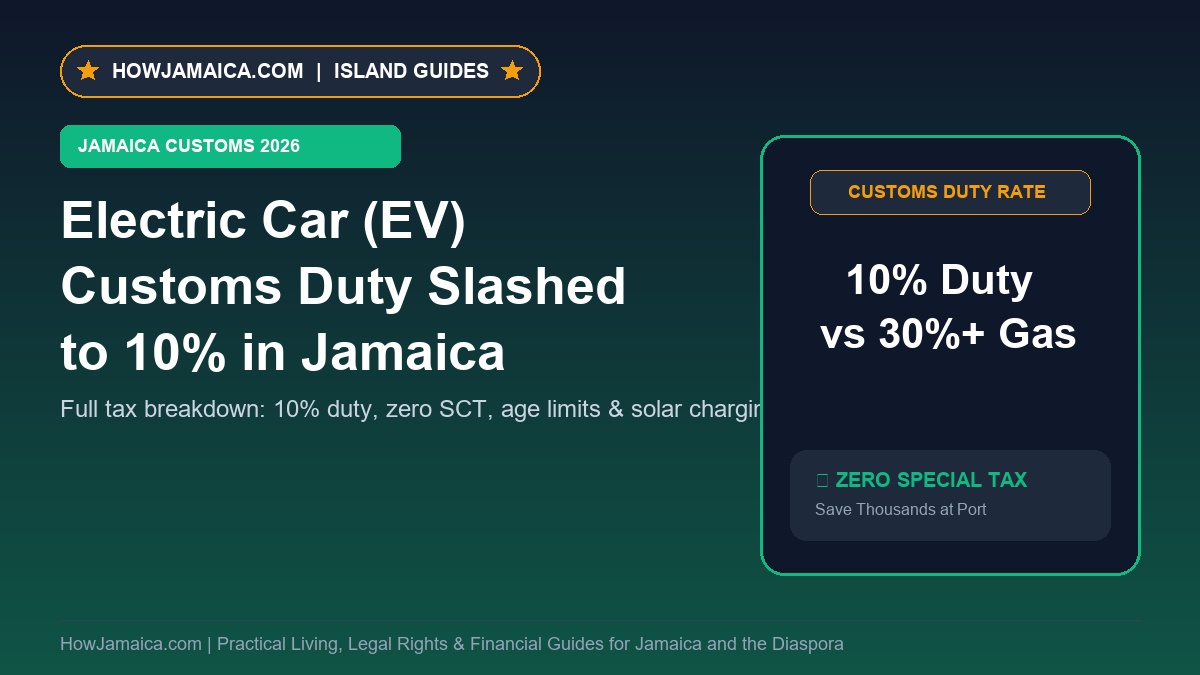
This makes a real difference. Jamaica has been pushing for greener transportation, and electric vehicles (EVs) enjoy significantly lower duty rates. As of 2024, EVs attract a duty of about 10-15% of the CIF value, compared to 30-40% for petrol cars. Plus, there are no special consumption taxes on EVs.
But, and this is a big but, you need to consider charging infrastructure. While Kingston and Montego Bay have a growing number of charging stations, rural areas are still underserved. If you plan to drive outside of major towns, a hybrid might be a better bet.
Insider tip: If you’re importing a hybrid, check the battery warranty. Many hybrids from Japan are 5–7 years old with original batteries that may need replacement soon. A new battery can cost US$2,000: US$5,000, which could wipe out your duty savings. Always ask the auction house for a battery health report.
Timing Your Import: Avoid the Christmas Crunch
Believe it or not, the time of year you import matters. Between November and January, Jamaican ports are clogged with holiday shipments. Customs officers are overwhelmed, and your car could sit for weeks. Port storage fees during this period can be astronomical.
Insider tip: Aim to ship your car so that it arrives in Jamaica between February and April, or September and October. These are typically quieter months for imports, and you’ll get faster clearance. Also, avoid shipping during hurricane season (June. November) if possible, as delays due to weather are common.
Final Word: Do Your Homework, Save Your Money
Importing a car to Jamaica doesn’t have to be a financial nightmare. The key is preparation. Know the duty rates, choose the right age and type of vehicle, use a good broker, and time your shipment wisely. And if you’re a returning resident, don’t leave that exemption application to the last minute.
Remember: every dollar you save on duty is a dollar you can spend on a proper sound system, a set of rims, or even a weekend trip to Negril. Drive smart, Jamaica.
Have you imported a car recently? Share your experience in the comments below, good or bad, it helps the next person avoid the same mistakes.
Need help? Email us at admin@howjamaica.com.
Frequently Asked Questions
How does Jamaica Customs calculate duty fees on imported cars?
Jamaica Customs calculates duty fees based on the CIF value, which stands for Cost, Insurance, and Freight. This includes the purchase price of the vehicle, shipping costs, and insurance during transit. They then apply a duty percentage that varies depending on the car's age, engine size, and type. For example, cars under 3 years old generally attract a lower duty rate, while older cars, especially those over 10 years, face much higher rates and may be restricted altogether. To avoid overpaying, always request a proforma invoice from the seller that clearly breaks down the cost.
What is the CIF value and why is it important for importing a car to Jamaica?
The CIF value stands for Cost, Insurance, and Freight, and it is the total amount Jamaica Customs uses to calculate duty fees on imported vehicles. It includes the purchase price of the car, the shipping costs, and the insurance premium paid during transit. This is important because many people mistakenly think duty is based only on the purchase price, but customs uses the CIF value to determine the final duty amount. Knowing this helps importers budget accurately and avoid unexpected charges.
Are older cars more expensive to import into Jamaica due to duty fees?
Yes, older cars are generally more expensive to import into Jamaica because they attract higher duty rates. For instance, a car under 3 years old has a lower duty rate, while a car that is 5 years old faces a higher rate. Cars over 10 years old are subject to significantly higher duty fees and may even be restricted from importation depending on the model. This is why it is crucial to check the age of the vehicle and the associated duty structure before purchasing, to avoid overpaying.
Land Title Check
Know who legally owns the family land
We help you inspect the public land register and explain what it shows in plain English, so you can act before a dispute starts. Independent service, not the NLA.
From $29.99 USDPriority 1–3h $49.99 · Standard 24–30h $29.99
- Public register research
- Pay by card or PayPal
Make Jamaica Better & Start Businesses Together
Join thousands of Jamaicans at home and across the diaspora. Receive regular email updates on practical business opportunities, community initiatives, land & investment guides, and actionable ways we can build together.